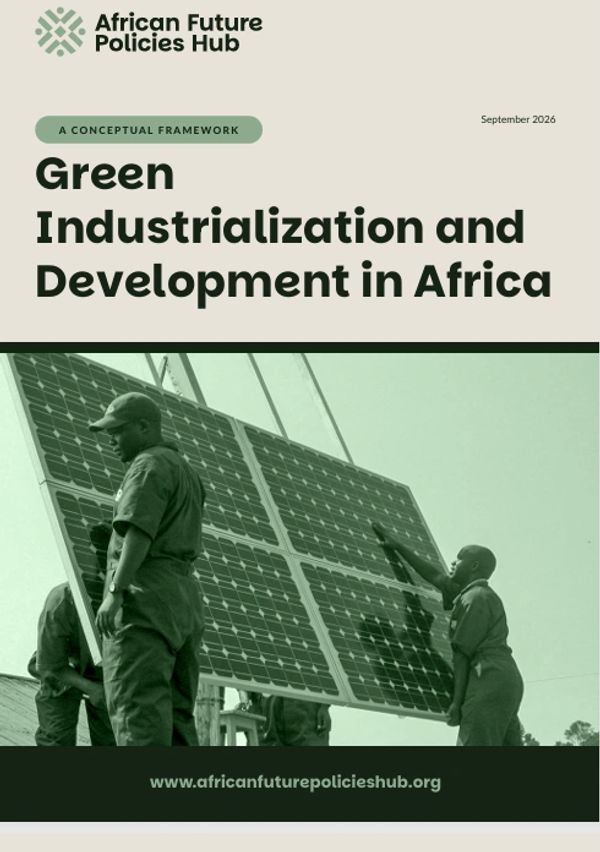
Green Industrialization and Development in Africa
The global salience of climate change as a policy concern means that low income countries are likely to be pressured to adopt development strategies that, where possible, conserve natural resources and minimize greenhouse gas emissions. The African Green Industrialization Initiative (AGII) is an effort to this end. This paper articulates a conceptual framework to guide the implementation of green industrialization strategies in Africa. The main argument is that green industrialization should not be viewed as “greening business-as-usual” but as a techno-industrial step change that enables African countries to exploit energy technologies of the future in pursuit of structural transformation of their economies (i.e., developmentalist green industrialization). The paper then discusses specific policy approaches that African countries can adopt at the sectoral, national, regional, and global levels to advance a developmentalist green industrialization agenda
The paper was written by Professor Ken Opalo
October 2026
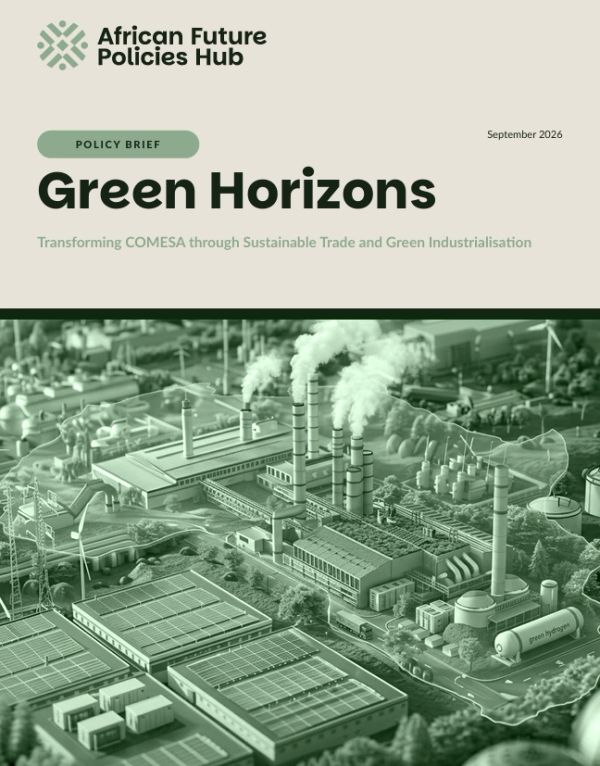
Green Horizons: Transforming COMESA through Sustainable Trade and Green Industrialisation
The global transition to low-carbon development is reshaping international trade, industrial competitiveness and investment patterns. Increasingly, market access depends not only on cost and productivity, but also on carbon intensity, product traceability, environmental performance and compliance with sustainability standards. The EU Carbon Border Adjustment Mechanism (CBAM) has applied under its definitive regime since 1 January 2026, while the EU Deforestation Regulation (EUDR) is due to apply from 30 December 2026 for large and medium sized operators and from 30 June 2027 for most micro and small operators. Although these measures were adopted unilaterally by the EU, they can reshape conditions of access to the EU market and affect trade flows. This underscores the importance of regulatory dialogue, capacity support and WTO reform aimed at transparent, non-discriminatory and multilaterally coherent trade rules.
The paper was authored by Moshe Kao and reviewed by Shimukunku Manchishi.
September 2026

Protecting the aluminium industry: Emissions monitoring and reporting
As carbon border measures become more widespread, exporters are increasingly required to demonstrate the emissions embedded in their products to maintain access to key markets. This is particularly significant for South Africa’s aluminium industry, which exports a substantial share of its production to the European Union.
The paper was authored by Seutame Maimele and reviewed by Maria Ogbugo, Shimukunku Manchishi and Kasonde Chituta.
August 2026

Methane regulation in Africa Shaping equitable trade and climate transitions in a global context
Methane has emerged as a critical focus in global climate governance, marking a new chapter in efforts to meet the Paris Agreement’s objectives.
Authors: Shimukunku Manchishi and Kasonde Chituta
March 2026

An Equitable Trade-Climate Agenda, priorities for developing countries
An agenda-setting brief by the Centre for Science and Environment and African Future Policies Hub 2026
March 2026